Learning in the Future
Picture a classroom where lessons respond to each student, history can be walked through in VR, and learning feels more like discovery than memorization.
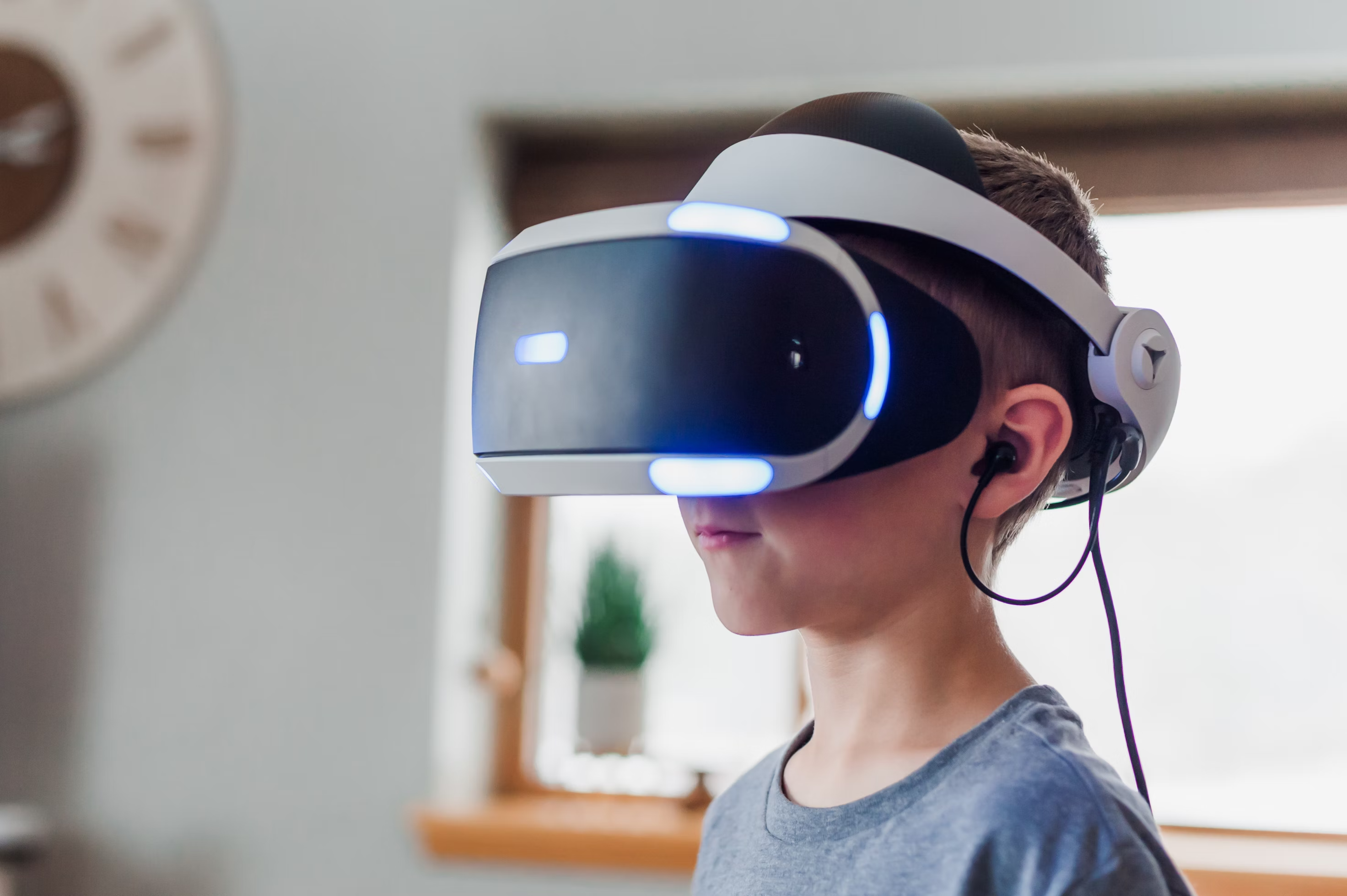
Picture a classroom where lessons respond to each student, history can be walked through in VR, and learning feels more like discovery than memorization.
Education is becoming more interactive through AI tutors, adaptive learning systems, and virtual reality lessons that help students see, explore, and experience ideas in new ways.
Students can get extra help, fast feedback, and support outside the classroom.
Virtual reality can make science, history, and training far more interactive.
Smart tools can adjust lessons to better match each student's learning pace.
A student starts class with an AI tutor that notices where they are struggling and adjusts the lesson instantly. Later, the class enters a VR simulation to explore ancient cities, science labs, or even space.
Instead of only reading facts, students interact with ideas and build skills through experience. That makes education feel more alive and much more memorable.
These tools can make learning more flexible, visual, and engaging. They also help students build skills that are important in a modern technology-driven world.